
Washington People Directory Landscape
No single Washington directory lists everyone. City pages route calls by office, school pages identify educators, and Utah Tech exposes a rich campus index. The county's land systems organize owners by name and parcel. Business and license tools add public commercial roles. For an earlier resident, newspapers, cemetery records, census schedules, and archival books take over. These official people directories have narrower scope than a compiled name service, but each entry has a known keeper and purpose.
| Local source | People represented | Record keeper | How to reach it |
|---|---|---|---|
| City facility list | Departments and public roles | Washington City | Free web list, then main line |
| School staff pages | Teachers and school staff | Washington County School District | Free school pages |
| Utah Tech Campus Directory | Faculty and staff | Utah Tech University | Free keyword search |
| State employee phonebook | Utah agency staff | State of Utah | First and last name search |
| Business and license tools | Proprietors, entities, licensees | City, county, and state | Keyword, entity, or license search |
| Recorder and Assessor viewers | Owners and recorded parties | Washington County | Free viewers; paid data extract |
| Library and archive sources | Past residents and officials | Library, university, and Archives | Catalog, digital images, counter, ILL |
Choose by relationship, not just by name. A public role points to a government or school directory. A licensed trade points to a regulator. An address points to county ownership files. A Washington ancestor may require a census, paper, cemetery entry, court register, or land book. The full access-law and copy process belongs with Washington public records; the focus here is what each directory lists and how its entries can be read.
Washington City Role Directory
The Washington City facility directory is a routing list, not an employee-name search. It identifies City Hall, Justice, Administration, Building, Planning, Recorder, Business License, Cemetery, Police, Fire, Public Works, Power, parks, and other services by role, address, phone, hours, and shared email where supplied. A person known only by title is best traced through the office entry, current agenda, minutes, or elected-official page.
No unified city staff browser was verified. If the role pages do not identify the person, call the department or City Recorder at 435-656-6308. A narrow request for an existing staff roster can follow. The separate Utah state employee directory should be used only for state workers. It requires both first and last name and limits use to public-service contact rather than commercial mailing lists.
The official state search can be seen on the Utah employee phonebook.
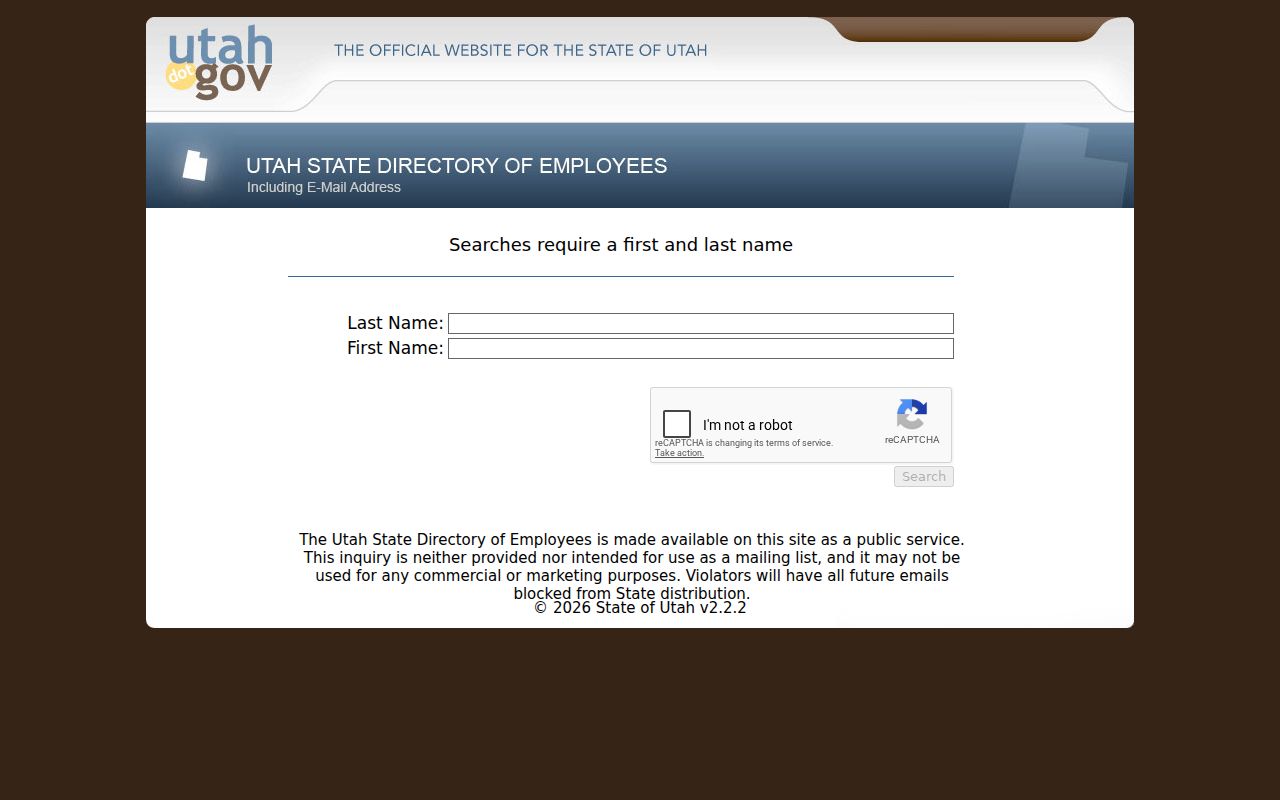
Its two required name fields make it precise, but a missing result says little about city or county personnel.
| City entry | Facility, public role, address, main phone, hours, and role email when listed |
|---|---|
| State entry | Employee identity and state work contact returned after first-and-last-name input |
| City fallback | Department main line, agenda or minutes, then a focused request to the recorder |
Note: Washington County department pages provide office duties and main numbers, but the research did not verify a countywide employee-name directory.
Washington School Staff Directories
Washington County School District publishes an administration roster with names, credentials, functions, emails, and phone extensions. Its school sites then narrow the view. The Washington Elementary staff page and Crimson Cliffs High faculty directory browse public staff cards with names, roles, and email links. These are current professional contact lists, not student or alumni databases.
The Washington Elementary roster shows the format used by a local school directory.
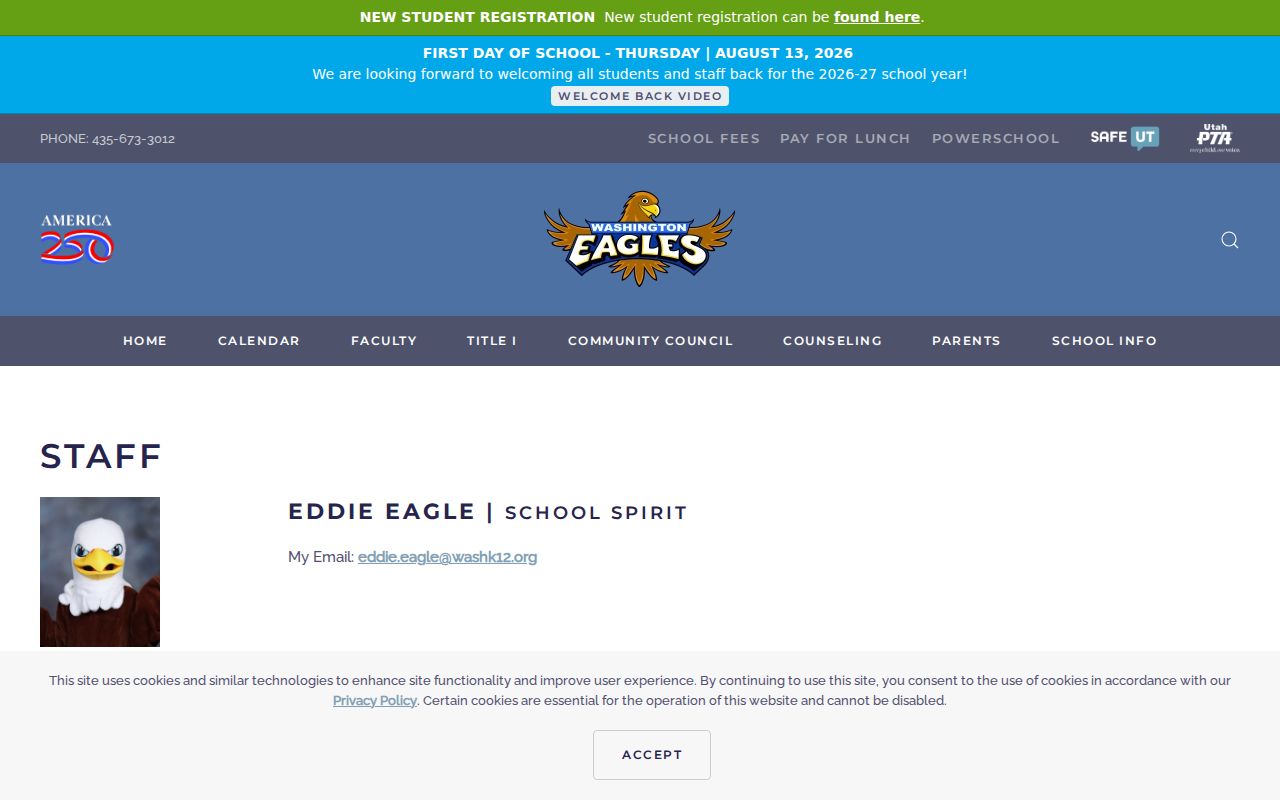
A role can distinguish two staff members with similar names and tells the reader which school office to call.
Crimson Cliffs provides a second school-level route for Washington families.
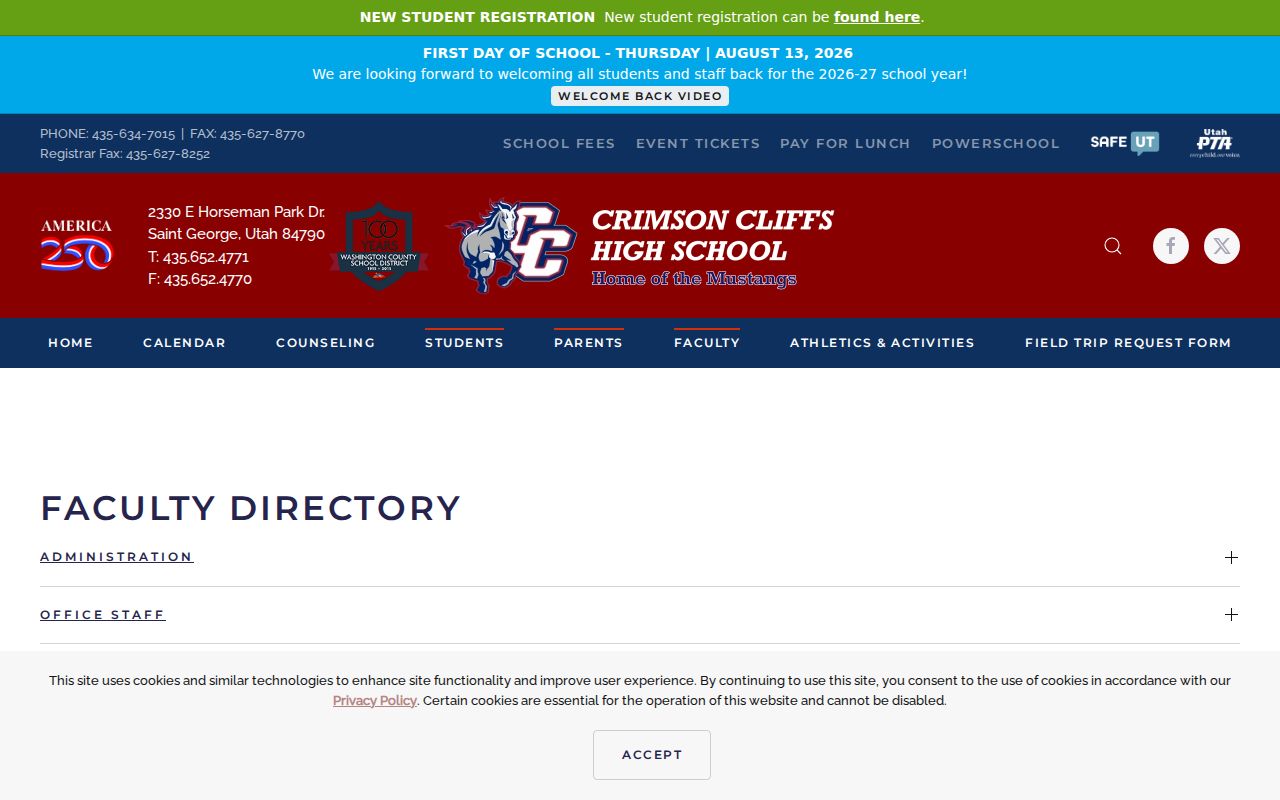
When a current staff card is absent, use the district's public administration directory or the school main office. Yearbooks and older papers can help with former classmates, but protected student education files are not part of these public people directories.
Utah Tech Directory Near Washington
The Utah Tech Campus Directory is the strongest open education search in the Washington and St. George area. One text box accepts a name, title, department, or college. Results can switch between card and table views, and quick links point to high-use units. A broad role term can reveal the team around an office, while a full name can narrow to one card.
| Search control | Input style | What it does |
|---|---|---|
| Name, title, department, or college | Single keyword box | Searches several directory categories |
| Search | Button | Runs the query |
| Clear Results | Action | Resets the current list |
| Card or table | View toggle | Changes the result layout |
| Page controls | First, prior, numbered, next, last | Moves through long result sets |
The live campus search shows how those controls are arranged.
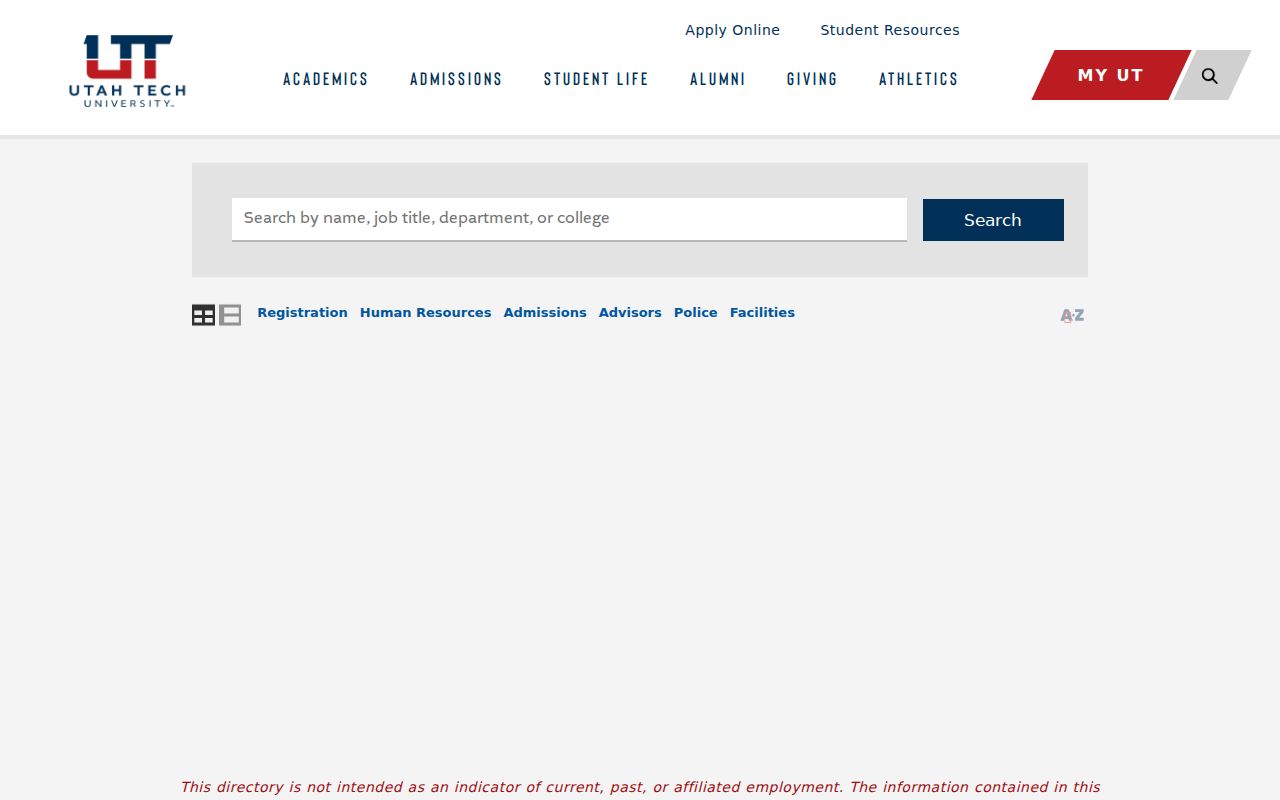
A result may include preferred and full name, title, college or division, department, building and room, phone, email, profile link, and headshot. An August 2026 search for “Registration” returned a Registration Coordinator for Residency along with registrar, records, audit, graduation, and technical roles. That sample shows why a unit term can work when a person's spelling is uncertain.
Washington Business Name Directories
The Washington City business listing is a compact public directory with one optional keyword field, a Clear button, and number or A to Z browse links. Entries can show a proprietor or business name, phone, street address, and website. Check the free list before asking the city for an underlying license file. The list does not state one coverage or refresh date.
The city's public business list provides a direct view of that browse layout.
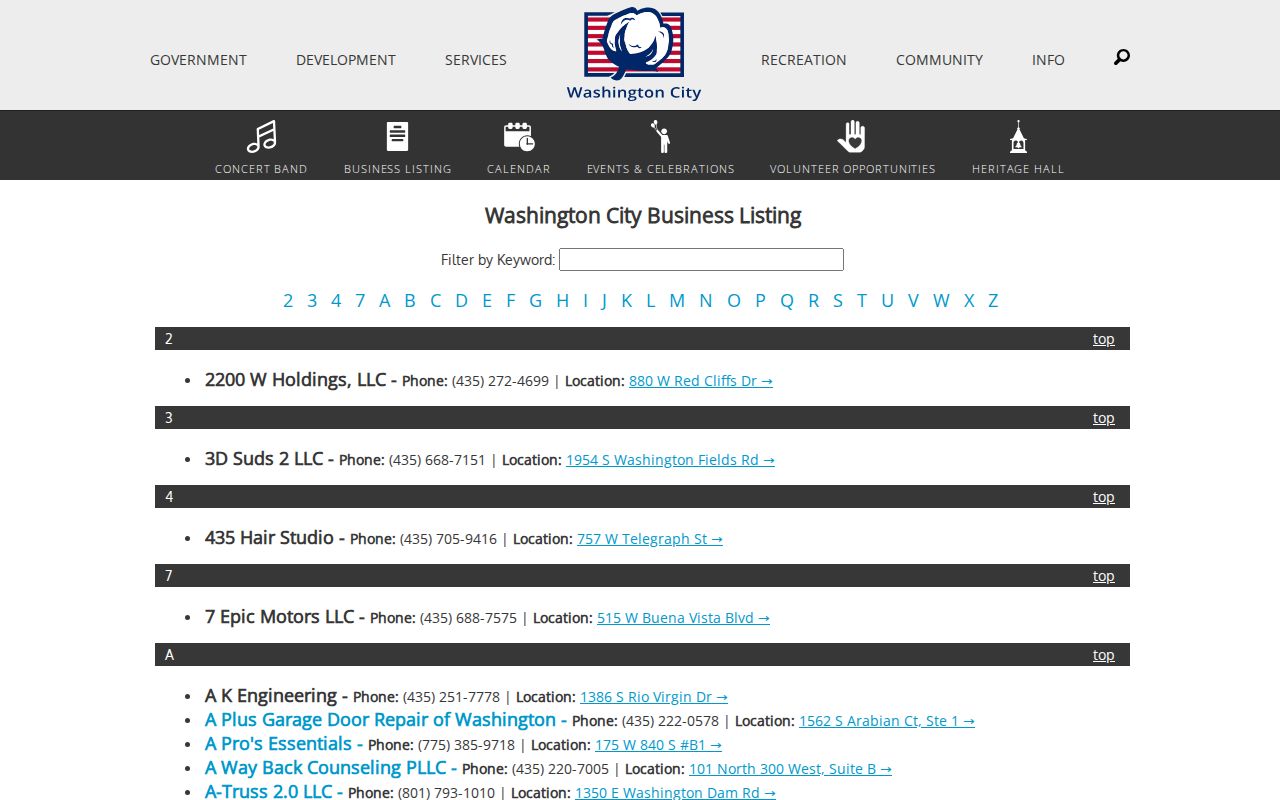
One visible entry for Alyson Rhoads includes a telephone number and a Hayfield Drive suite address, which shows that the index can connect a name to a local business place.
For a broader check, use the Utah Division of Corporations Business Entity Search for entities, agents, registration facts, and filing addresses.
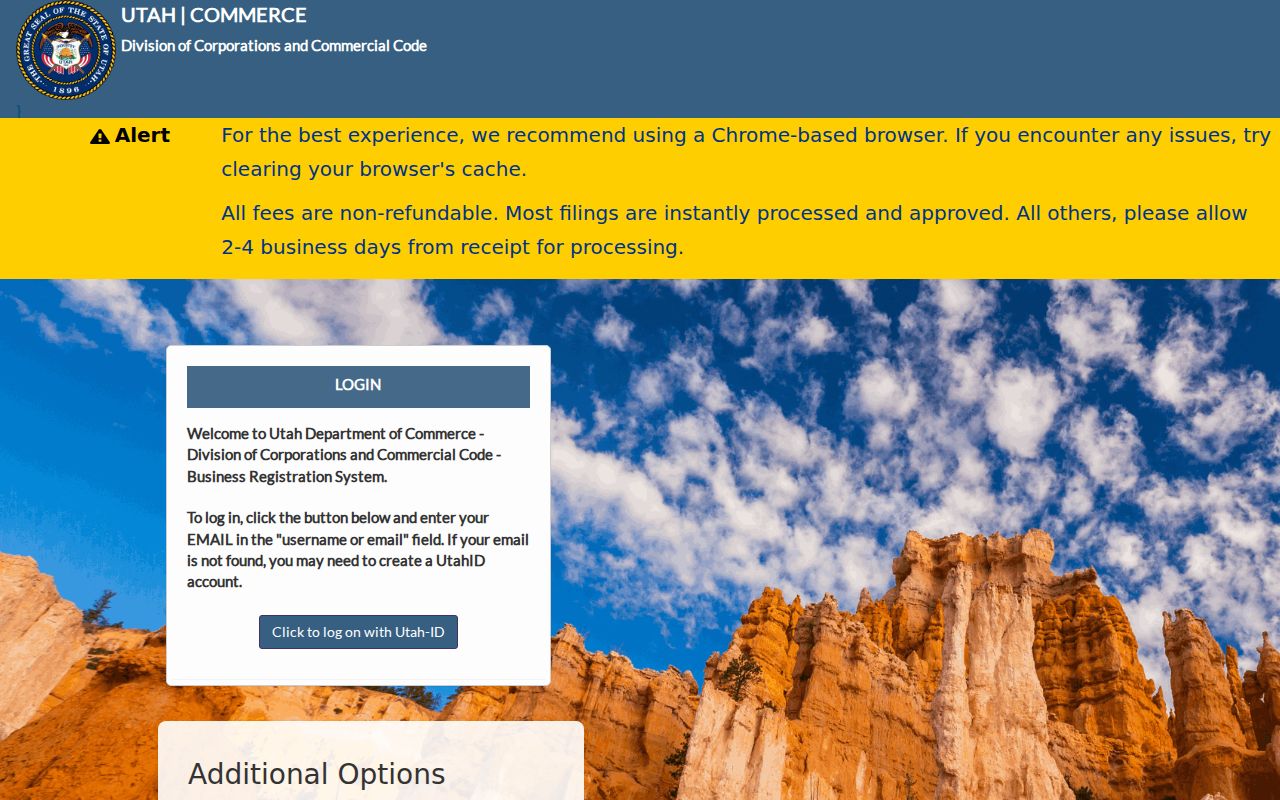
The state entity screen extends the Washington city list by connecting a business name with its registration record and public filing roles.
A regulated occupation belongs in the DOPL License Lookup, which searches by name or by profession and license number.
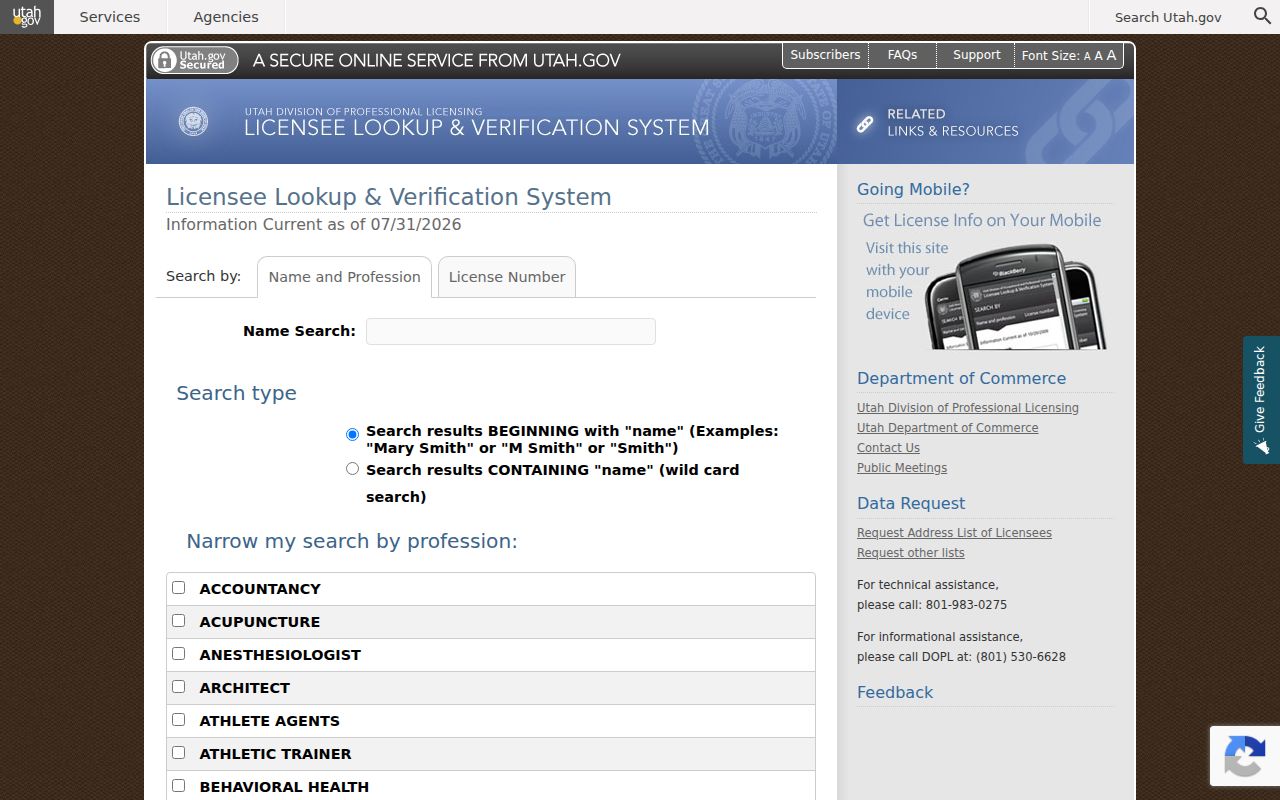
License results may show type, number, status, expiration, and public discipline. A printed roster can age, so the current regulator entry should control.
Washington Property Owner Directories
Washington County land data works like several linked people directories. The Assessor roll pairs owner names with mailing and situs addresses, value, acreage, and parcel facts. “Situs” means the physical property address. The mailing address is where ownership and tax correspondence goes, and it may differ. The Recorder index then identifies grantors and grantees in deeds, liens, plats, and other filed instruments.
Free viewers in the county GIS map inventory supply parcel geography, assessor reports, ownership information, historic plats, aerial comparison, and the Old Abstract title summary for 1854 through 1992. The paid $200 Public Extract adds weekly pipe-delimited owner, mailing, situs, value, book-page, document, and legal-description fields. It is a richer owner directory, but payment is by check and the download window is ten days.
Free viewer or paid extract? Use GIS for one parcel or map area. The extract is designed for structured owner fields at county scale, and its value data refreshes in May and October.
County GIS can also select parcels by shape or radius and produce Avery 5160 owner labels. That is a striking official geographic-directory function. Still, an owner entry does not prove that person now lives on the land. Washington's city limits and the 84780 postal area are not the same, so use the city-boundary layer when jurisdiction matters.
Washington Historical Directory Fallbacks
The exact shelf years for local Polk, reverse, and telephone directories were not published in the library material reviewed. That gap should not be filled by guesswork. Contact the Washington branch at 220 N 300 E, 435-301-7650, or the larger St. George branch and ask staff to check a title and year. A reverse directory runs from address to occupant, while a standard city directory runs from name to address.
The Washington County Library's HeritageQuest access gives current cardholders remote census and genealogy images.
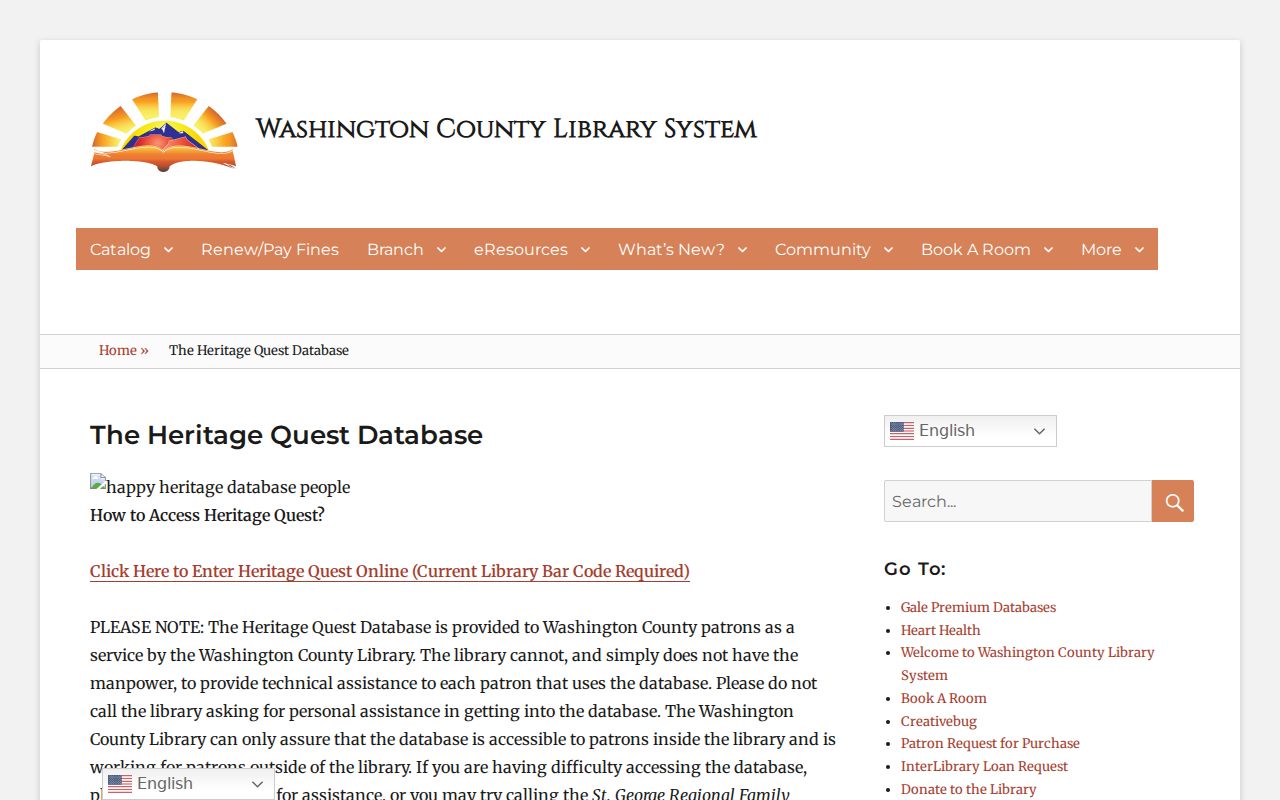
Pair a directory year with a census, paper, cemetery entry, or deed. Interlibrary loan can request books, maps, articles, newspapers, and microfilm. Washington County residents age 18 or older provide a card number and citation details; return postage is $4, microfilm may add $4 to $8 per roll, and emailed articles are often free.
- City directory
- A name-first list that may show an address, occupation, spouse, or business.
- Reverse directory
- An address-first list used to identify the recorded occupant at a past point in time.
- OCR
- Machine-read newspaper text. Search spelling variants because print quality can distort names.
- Browse-only index
- Scanned alphabetic pages that must be read by volume rather than queried in a name box.
Washington News as Directory
Utah Digital Newspapers turns the Washington County News run from 1898 through 1988 into a community name directory. Search controls include keyword, year range, city, county, language, title, and item type. An issue exposes date, place, page count, article segments, a stable reference, and downloads. Community columns, legal notices, funerals, visits, officers, and civic appointments can connect people whom formal indexes separate.
Names in old print are fragile. Try initials, a spouse or parent, a neighborhood, and variants such as Neilson, Nielson, and Nisson as separate searches. Similar spelling is not proof of one family. A 1941 issue includes a dedicated Washington community column, while a 1909 issue carries local notices and public officers. Use the newspaper fact as a lead, then confirm it in a city minute, court book, deed, or certificate.
Note: Federal census schedules through 1950 are public and add household, age, relationship, birthplace, and recorded residence to the newspaper trail.
Washington Cemetery Directory Gaps
The municipal cemetery is Washington's most local historic name directory. Burials reach back to 1859, and the Washington City Cemetery page links an occupied-name and plot map. The city also gives a Parks and Cemetery office route and a sexton contact for existing graves and plot locations.
The cemetery service page shows the official access point.
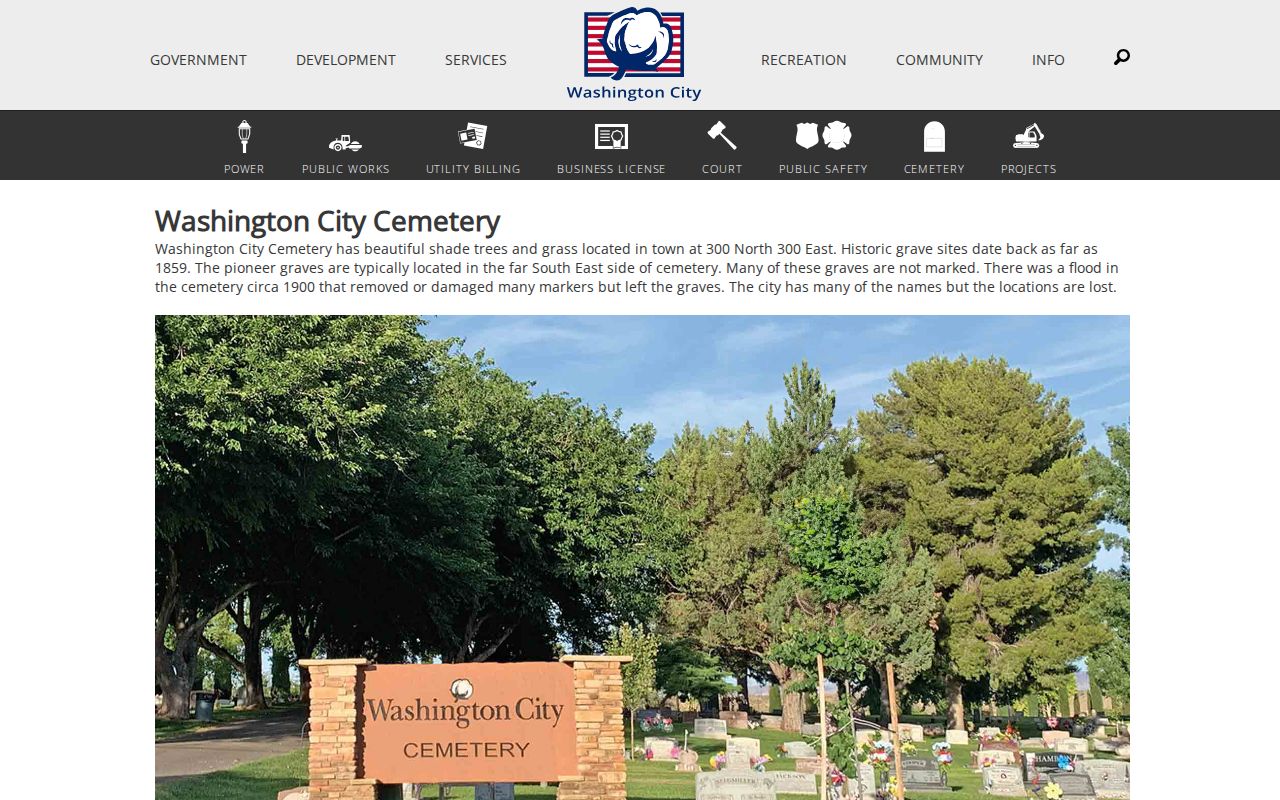
A flood around 1900 removed or harmed markers. The city retained many names, yet the exact places of numerous graves, especially pioneer plots in the far southeast, are lost or unmarked. A missing map point is not proof that no burial occurred. Ask the sexton, then compare the name with an obituary, death certificate, probate file, church register, or newspaper.
Washington Archives Directory Trail
The Utah State Archives research catalog is organized by creating agency and record series. Search Washington City, Washington County, the Assessor, Clerk, Recorder, courts, Probate Court, Sheriff, Treasurer, Library, and Washington County School District. Early land certificates, deed books, probate registers, court indexes, and local government series all function as directories once the correct volume is found.
The Archives research hub displays the routes into these older collections.
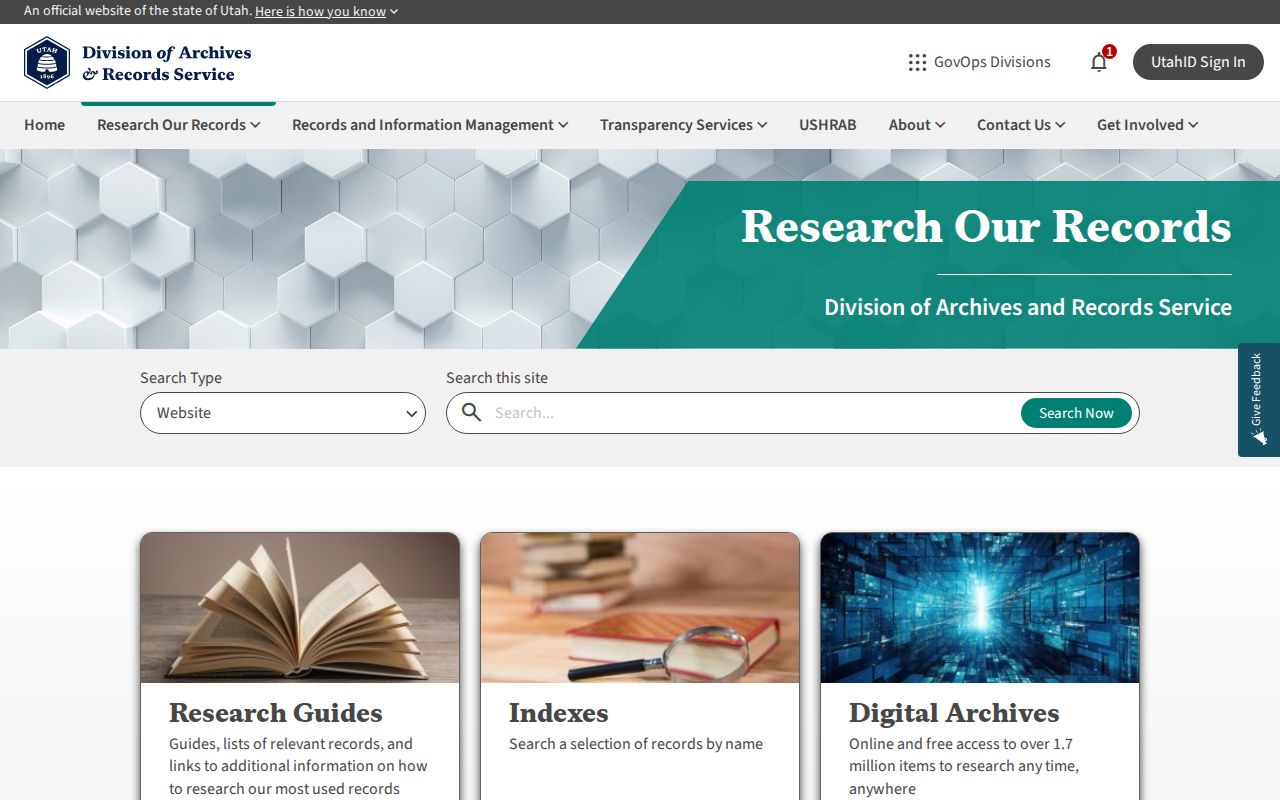
Historic Fifth District books are online as scanned pages, not as a typed party-name search. Civil and criminal indexes and probate registers require manual browsing. Probate entries may show names, case kind, counsel, actions, and dates, while adoption references remain restricted until the required period or court permission applies. Washington land evidence starts before statewide civil vital records, so an early resident may appear in a land certificate, probate decision, church file, or paper rather than a modern directory.
- 1856 onward: county land certificates create early name-bearing property evidence.
- 1859 onward: cemetery records add burials, though some plot locations were later lost.
- 1898 to 1988: the digitized Washington County News supplies searchable community names.
- Modern era: school, campus, business, government, and property systems provide current role-based directories.
Each era asks a different question. Modern people directories are strongest for public roles and structured ownership. Older directories work best when several small references converge on the same name, place, and time.