
Finding People Across Washington Records
A useful search begins with the fact already known. A full name can lead to the Washington County Recorder, Utah court records, the city business list, or the state’s license and corporation tools. An old address works best in the county parcel viewers. A death date or family name belongs in the cemetery map, newspapers, probate books, or library databases. Each source describes a person in a specific role, so two independent records are stronger than one matching name.
Washington City has no single municipal people database. High-value name records are split among the city, Washington County offices in St. George, and statewide Utah systems. Begin narrowly, note the spelling and date shown, and then move to the next custodian that can confirm the same identity.
- Search the county Recorder or Assessor when a name or Washington address is known. Compare the owner’s mailing address with the property’s physical, or situs, address.
- Check Utah XChange by party name, then narrow by Washington County, court, case type, and date.
- Follow a parcel’s book, page, or document number into the deed chain. Use Old Abstract and historical plats for earlier ownership.
- For a deceased person, connect the cemetery map or newspaper notice with probate and an eligible vital-record request.
- When no index answers the question, contact the custodian and request a defined record series and date range under GRAMA.
Note: A matching name is a lead, not proof; compare dates, addresses, party roles, relatives, or another official identifier before deciding.
Why Washington Searches Reach St. George
Washington is an incorporated city northeast of St. George, not the Washington County seat. That distinction changes where a search goes. City Hall keeps Washington ordinances, meetings, permits, cemetery records, licenses, and administrative files. The Recorder, Assessor, Clerk-Auditor, county elections staff, and Fifth District Court are based in nearby St. George. State offices then supply court data, vital certificates, professional licenses, voter services, and corporation filings.
The name “Washington” can also point to a city, a county, or a postal address. An 84780 mailing address does not by itself prove that a parcel was within Washington’s city limits at the date in question. Check county GIS layers, plats, annexation records, and the record’s date. The 2018 Staheli annexation is a concrete example of why today’s boundary cannot be projected backward without checking.
Even the historic street grid carries a local trap. Washington’s address origin is Telegraph and Main, while nearby St. George uses Tabernacle and Main. An old direction, block reference, or legal notice must be read against the right city grid before linking it to a modern parcel.
Washington People Search Records Desks
Three offices form the local core. The Recorder links names to deeds, liens, plats, surveys, and ownership history. The Clerk-Auditor manages marriage and county business-license searches. Washington City’s recorder routes non-police and police requests separately and publishes city records, codes, meetings, ordinances, and resolutions. Detailed access rules and copy procedures are kept on the Washington public records page.
Washington County Recorder/Surveyor
111 East Tabernacle
St. George, UT 84770
435-301-7680
Washington County Clerk-Auditor
111 East Tabernacle
St. George, UT 84770
435-301-7220
Washington City Recorder
111 North 100 East
Washington, UT 84780
435-656-6308
Each desk can also help when its portal fails. The Recorder retrieves land records for counter viewing and sells copies or certifications. The Clerk can answer questions about its JavaScript-based search. City staff accept focused requests through the published CivicReview routes.
Washington Recorder Search and Old Abstract
The county’s modern Property Search opens through a public guest login, but the official site does not claim one start year for all indexed documents. The separate Old Abstract tool is the verified long bridge: it presents condensed title histories from 1854 through 1992. Historical ownership plat maps add parcel lines by year. These sources can move a known owner backward through time or connect an early description to a present parcel.
The Washington County Recorder page is the official entry point. Its captured view appears below.
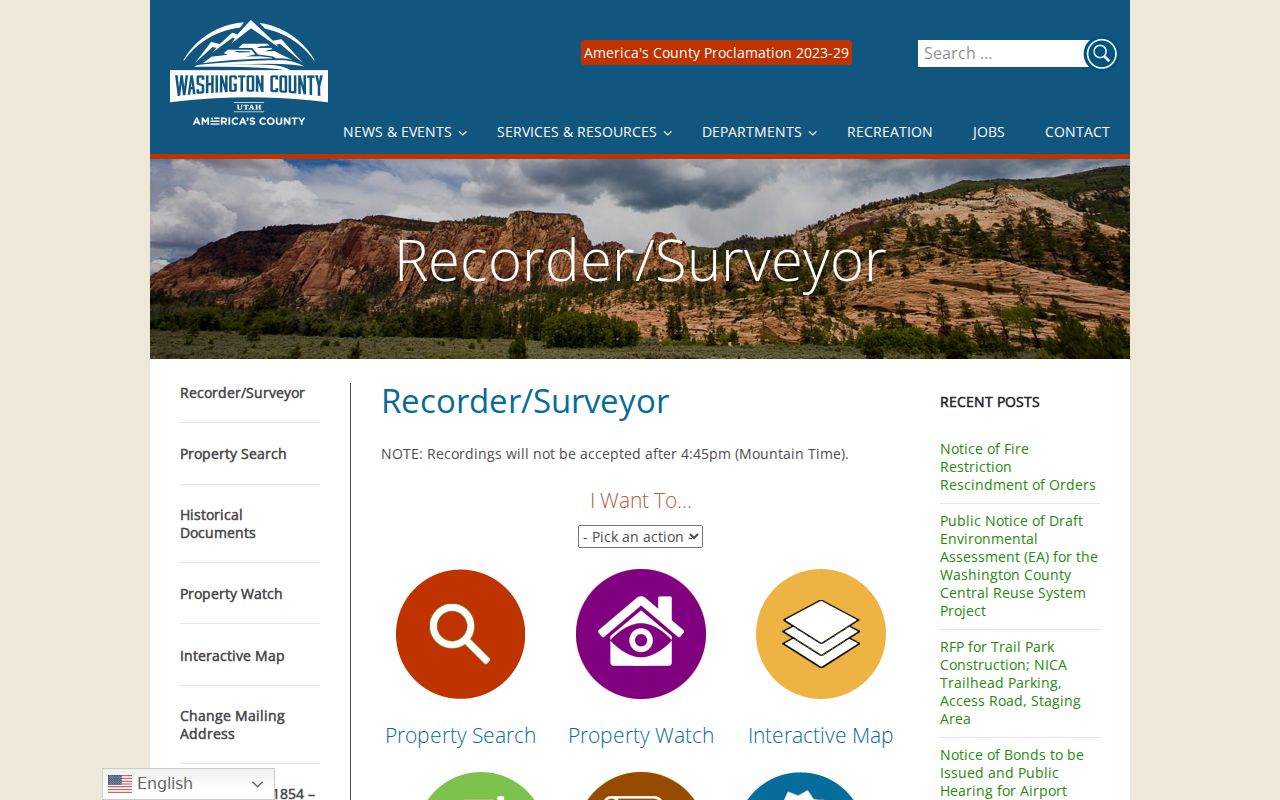
The page groups the guest property viewer with maps, older records, and Property Watch. Property Watch sends notice of new recorded changes; it does not search backward or replace a deed copy.
| Recorder route | What it does | Verified reach | Fallback |
|---|---|---|---|
| Property Search | Modern property and owner lookup | No single start year stated | Recorder counter |
| Old Abstract | Condensed title history | 1854–1992 | Underlying document book |
| Ownership plats | Parcel lines by year | Year-selectable maps | Recorder or GIS staff |
| Property Watch | Future change alert | After enrollment | Recorded document search |
Washington Address and Owner Search
The Washington County GIS map inventory links the Assessor Record Search, Recorder viewer, county GIS, zoning and general-plan layers, aerial comparisons, election maps, historical plats, and Old Abstract. This gives an address search several paths. Start with the parcel, compare owner and address fields, then use its book, page, or document number to reach the recorded instrument.
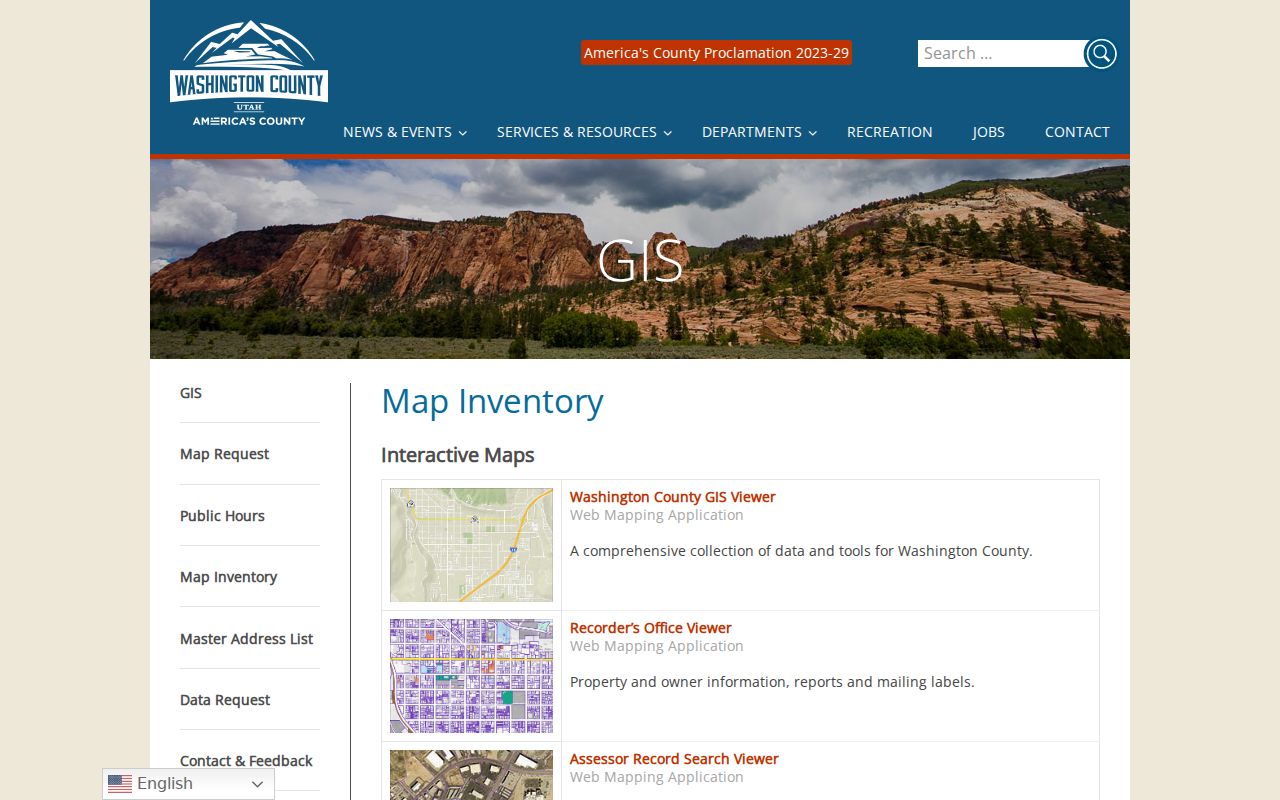
The image shows why the county map inventory is more than one map. It is a menu of record systems that describe ownership, boundaries, value, zoning, and change over time.
- Situs address
- The physical location of the land.
- Mailing address
- The address used for ownership and tax correspondence; it can differ from the situs.
- Grantor and grantee
- The person transferring an interest and the person receiving it.
- Plat
- A recorded map that defines lots, blocks, parcels, and boundaries.
The free viewers supply parcel geography and basic owner facts. The county’s $200 weekly Public Extract goes further with repeatable owner names, separate mailing and situs fields, values, acreage, book and page, document number, and legal description. That paid file is useful for bulk work, but one-person research should usually begin with the free viewer and the Recorder counter.
A parcel owner may be a trust, entity, or more than one person. Ownership also does not prove who currently lives there. Confirm residence with a second lawful source, especially in fast-growing Green Springs, Sienna Hills, Washington Fields, Long Valley, Sunrise Valley, or Warner Valley.
Search Washington Court Records by Name
Washington City Justice Court handles city ordinance matters, traffic, class B and C misdemeanors, infractions, and small claims. Washington County Justice Court and the Fifth District Court in St. George cover other county and district matters. Public district and justice case data is searched through Utah XChange. Federal cases use PACER, a separate system.
Remote XChange searches are paid, while public access is free at most district courthouses and the Utah State Law Library. Search by a party’s last and first name, then narrow by court, county, case type, and dates. Results can show the court, case number, filing date, party role, judge, hearings, disposition, and public documents. St. George’s district data is described as complete from March 17, 1997; older converted files may be incomplete.
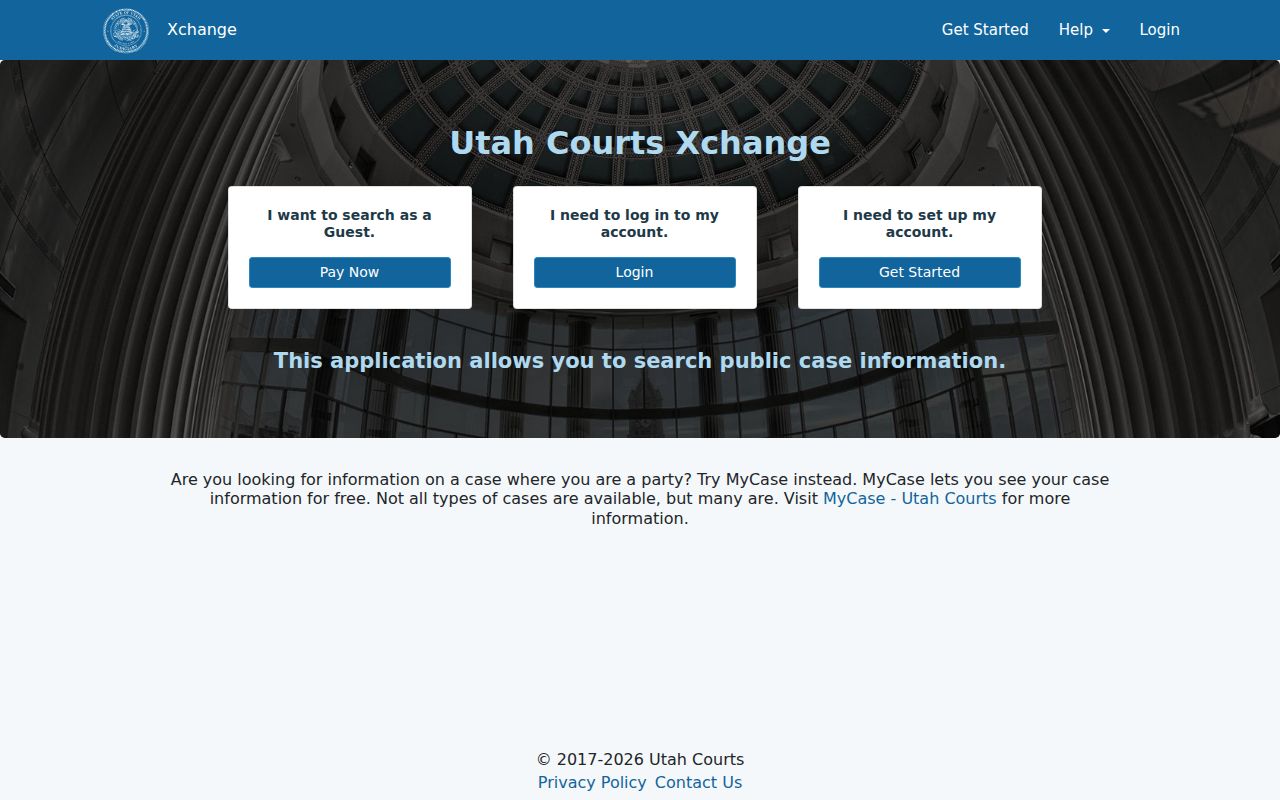
The official XChange screen supports both party-name and exact case-number work. A common name should be narrowed before each remote search because each click can carry a charge and results stop at 500.
| Search control | Input | Best use | Required? |
|---|---|---|---|
| Jurisdiction | District, Justice, or both | Choose the likely court level | No |
| Last Name/Company | Party surname or entity | Begin a name search | Conditional |
| First Name | Given name; wildcard supported | Reduce same-name matches | No |
| Search Scope | State, county, or court | Limit results to Washington County | No |
| Date Range | Filing, disposition, or judgment | Separate people across time | No |
Sealed and expunged cases, juvenile matters, adoption, civil commitment, and private portions of several family case types do not appear. Ask the relevant clerk for a public file or copy when the docket is incomplete. A missing online result does not open a restricted record.
Washington Vital Records Search Routes
Vital records are proof of an event, not an open people directory. Utah’s Office of Vital Records and Statistics holds statewide birth and death records from 1905 and issues marriage and divorce abstracts for 1978–2010. The Southwest Utah Public Health Department in St. George issues eligible Utah birth and death certificates locally. Marriage licenses and certified license copies come from the Washington County Clerk; divorce decrees come from Fifth District Court.
Utah Code §26B-8-125 requires identity and a direct, tangible, legitimate interest for restricted certificates. Eligible applicants may include the subject, specified immediate family, a guardian or legal representative, a person whose right depends on the record, an authorized official, or a court-order holder. Historical access is different. Utah Archives describes births as private for 100 years and death certificates as public after 50 years, with coverage checked series by series.
The Utah Vital Records forms hub shows the current order paths.
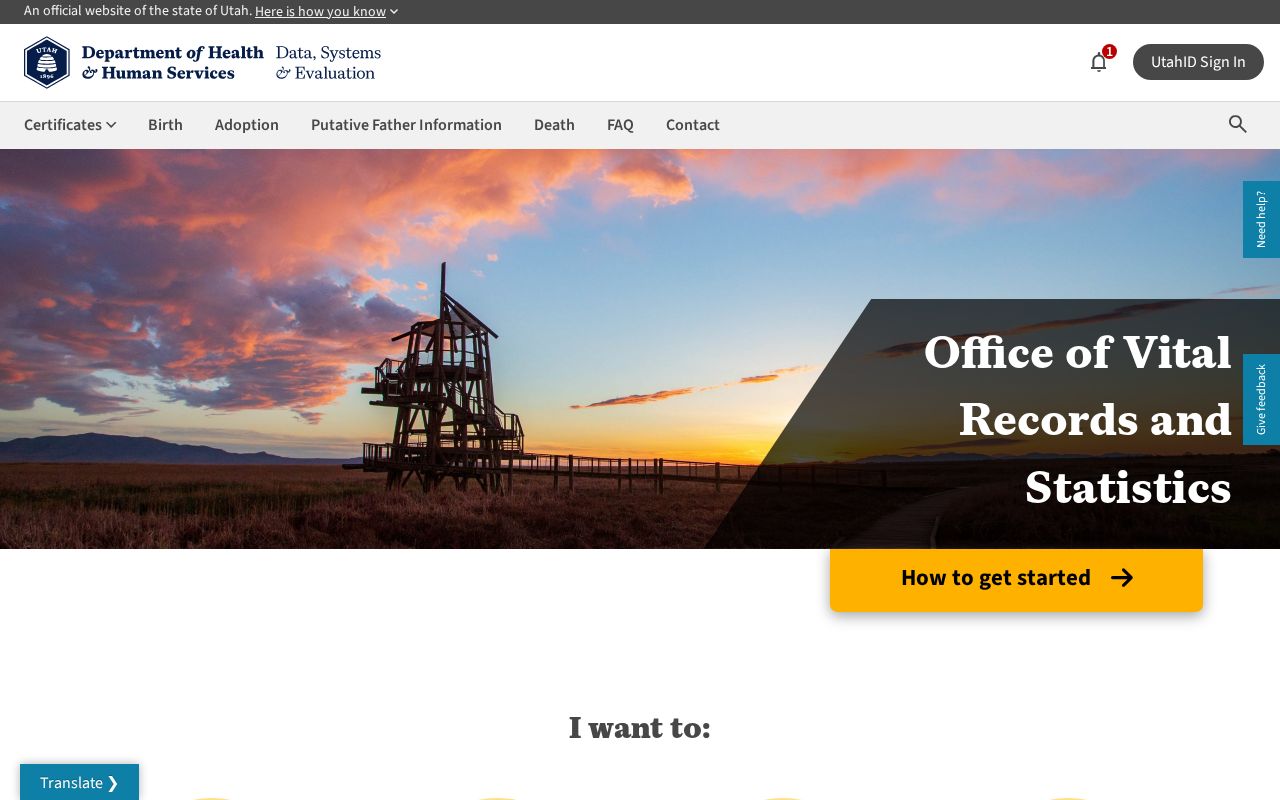
The forms ask for the event facts, the applicant’s identity and relationship, contact details, proof of identification, and the requested service. A paid search can still return no record, so compare the date and county with court, cemetery, or newspaper evidence first.
Note: A short marriage or divorce abstract is not the full county license, decree, or case file; order from the office that holds the needed record.
Washington Genealogy Search at the Library
The Washington County Library branch at 220 North 300 East is the local starting desk for family history. Its catalog can be searched for surnames, cemeteries, yearbooks, telephone directories, Polk directories, and Washington County titles. Some material may be held at the larger St. George branch. HeritageQuest gives county library cardholders remote access to census and genealogy images, while interlibrary loan can bring in books, maps, newspaper articles, and microfilm.
The library’s HeritageQuest page provides the database route.
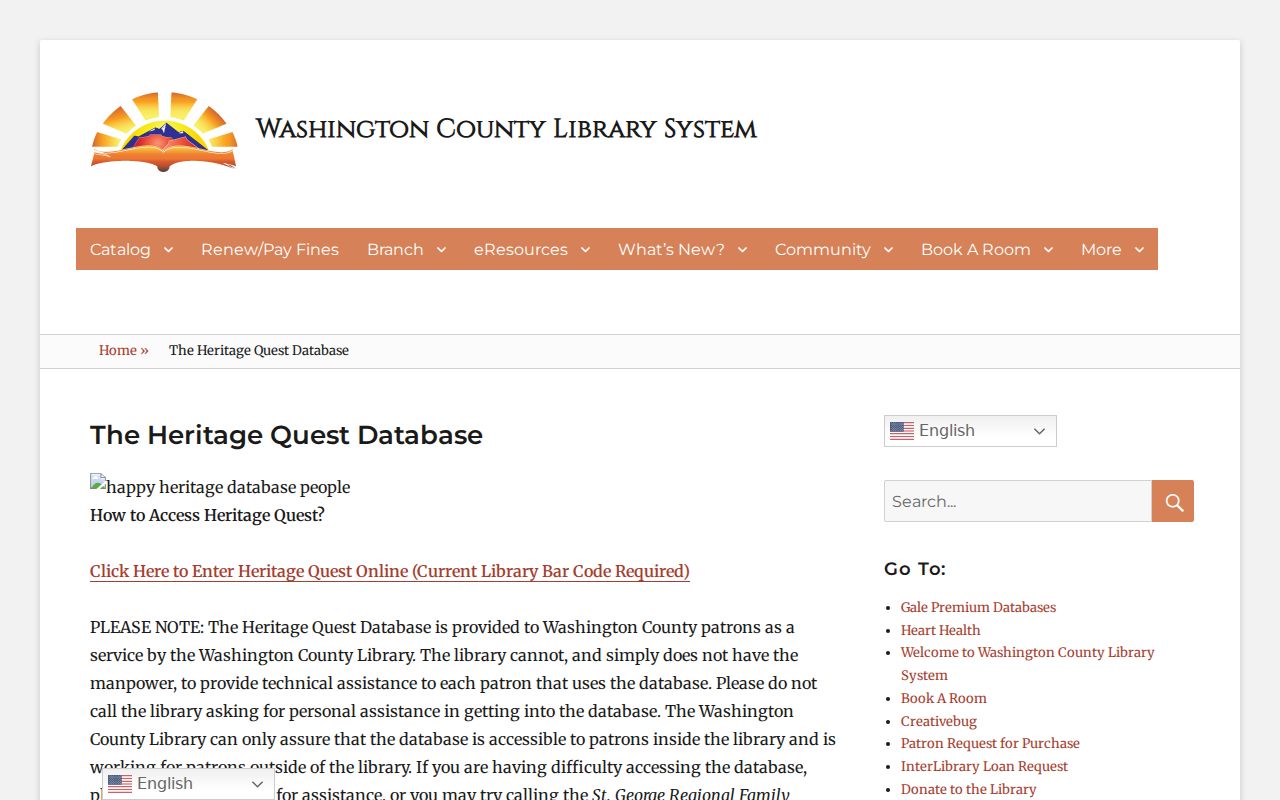
The library route matters because no official page lists a complete run of local city, reverse, or telephone directories. Ask the catalog and reference staff title by title. Federal census schedules through 1950, Washington County newspapers, church registers, cemetery records, and land files can then bridge gaps between directory years.
Washington Probate Search for Heirs
Probate can connect a deceased person with an estate representative, heirs, dates, attorneys, property, and public orders. In XChange, party codes such as DEC for decedent and HER for heir can help identify roles. Public letters of appointment can show who has legal authority to act for an estate. Filed addresses may be old or restricted, so the case number and underlying public file matter more than a loose address match.
Older Fifth District probate registers are preserved through Utah Archives. These are scanned page-browse books, not a typed name search. Select the correct series and volume, use its alphabetic index pages, and then read the register entry. Entries can include the person’s name, the type of case, counsel, actions, and dates. Adoption references remain subject to special court restrictions.
A practical flow is: obituary or cemetery name → probate party search → public letters or orders → parcel and deed chain. This sequence can reveal an heir trail without treating a commercial compilation as proof.
The Flood Gap in Washington Records
Washington City Cemetery has burials dating to 1859, but a flood around 1900 damaged or removed markers. The city retained many names even where the exact grave location was lost, especially among pioneer burials in the far southeast. A blank or missing point on the map is therefore not proof that no burial occurred.
The Washington City Cemetery page links the occupied-name and plot map and lists the Parks and Cemetery office and sexton contact.
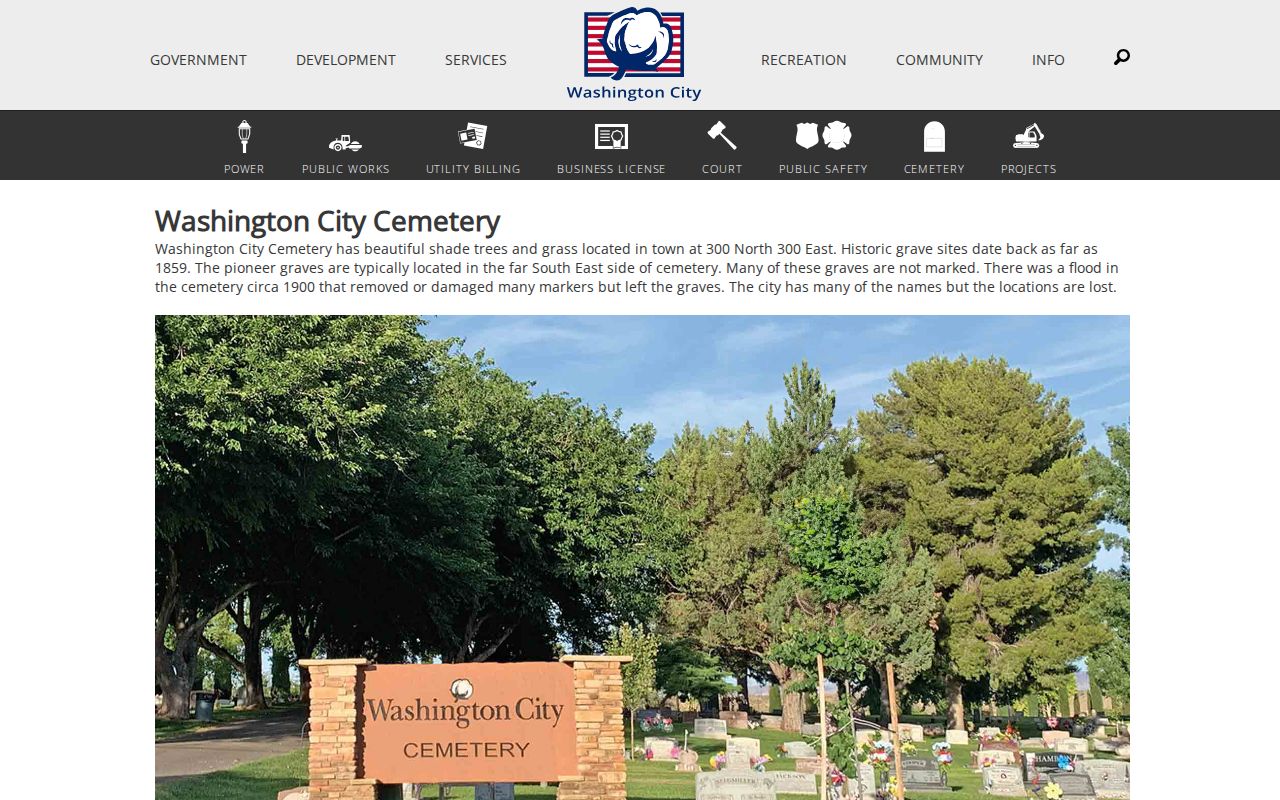
Use the mapped name as one point in a wider search. The city sexton, an obituary in Utah Digital Newspapers, a death certificate, probate, church registers, and census records may restore context when a marker or exact plot did not survive.
Washington Business and License Search
Washington City publishes a small business listing with a keyword field and alphanumeric browse links. An entry may show a business or proprietor name, phone number, street address, and website. It is worth checking before requesting the underlying city license. The county Clerk portal separately searches county business licenses, and Utah’s corporation search can connect an entity with registration and agent filing details.
For regulated work, the Utah Division of Professional Licensing search accepts a name or a profession and license number. Name searches can begin with or contain a string. Results can show license number and type, status, expiration, and public discipline when supplied. A reliable owner trail may move from the Washington business listing to the Utah entity filing and then to a professional license, with each source confirming a different role.
License basics may be public while tax, identity, or other protected fields in an application remain closed. Request only the public part and do not infer present status from an old printed roster.
Washington Voter Lookup Has Limits
Washington County administers city elections. Utah’s voter tool is an identity-gated self-check, not an open surname browser. A voter enters a registered first and last name, full birth date, and house number to see registration services, districts, polling details, a sample ballot, and ballot status. A nonmatch means the inputs did not find a current registration; it does not prove the person never registered.
Public voter data is governed by Utah election law, while exact birth dates, identification numbers, email, phone, and citizenship evidence remain private. At-risk status and the Safe at Home program can shield identity or actual address. Utah also restricts online publication and use of voter-list data. The full lookup fields, public and private split, county request options, and 2026 changes are explained in the Washington voter registration resource.
Washington Unclaimed Property Name Search
A past address can surface where expected records do not. Utah’s official unclaimed-property database searches owner names and lets the apparent owner begin a claim without buying a commercial list. A result may connect a person or business to an older address, but claim proof is separate from the public search and must be handled through the state process.
The Utah Treasurer directs searchers to the free Utah Unclaimed Property search.
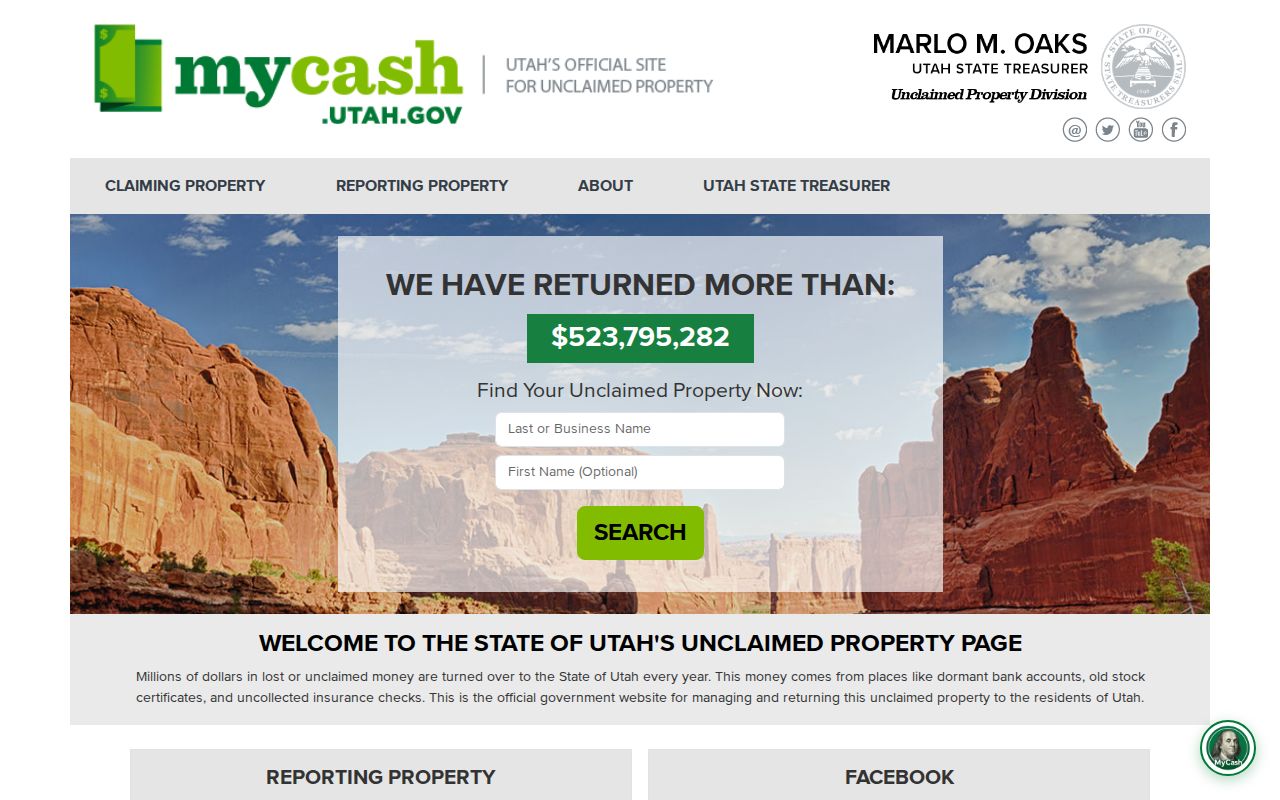
The official screen is also the safest verification route when a letter or caller asks for an advance fee, banking details, or urgent payment. State-held property claims are free. Independently visit the official address rather than following an unexpected message.
Washington Records Search Dead Ends
When a portal produces nothing, first ask whether the record belongs to the city, county, court, or state. Then ask the custodian which series and years exist, whether older volumes are at Utah Archives, and whether the public can inspect at the counter. A focused request should name the existing record, office, date range, person or parcel, and preferred format. GRAMA does not force an agency to create a new analysis or release private, controlled, protected, sealed, expunged, or otherwise closed material.
Washington City uses separate online routes for police and non-police requests. Washington County accepts requests by email, mail, fax, in person, and through Utah’s Open Records Portal. Courts maintain their own record-request process. Under GRAMA, an entity ordinarily responds as soon as reasonably possible and no later than ten business days, subject to extraordinary circumstances. A demonstrated public-benefit expedited request uses a five-business-day track.
Official records preserve their source, date, and party role. Commercial people-search compilations may be quicker, but they can merge similar names, keep stale addresses, and omit provenance. Use such compilations only as unverified leads. The sound finish is a second official source or a copy from the office that created the record.
| Search source | Main strength | Key limit |
|---|---|---|
| Official city, county, or state record | Named custodian, record date, and defined party role | Files are split across offices and lawful restrictions still apply |
| Commercial compilation | Fast aggregation of possible names and contact details | May merge people, retain old data, or omit the original source |
| Archives or library source | Historical context, preserved volumes, newspapers, and census access | May require page browsing, catalog work, or an in-person request |